Uncategorized
You want a subscription to <!–Startup Investor–> to view this content material.
The submit A New “Financial Regular” Will Emerge From the COVID-19 Disaster appeared first on Early Investing.
0

You want a subscription to <!–Startup Investor–> to view this content material.
The submit A New “Financial Regular” Will Emerge From the COVID-19 Disaster appeared first on Early Investing.
The Securities and Alternate Fee (SEC) has filed fraud fees towards Steven L. Brickner of South Florida. Brickner allegedly dedicated fraud in relation to $5.5 million raised to spend money on Hashish-related firms together with one known as “Excessive Nation” in Colorado. Based on the SEC, Brickner didn’t use any of the funds to pursue Marijuana-related ventures. Opposite to what was apparently relayed to buyers, Brickner spent over half of the cash on issues like automobiles, cryptocurrencies, and grownup leisure.
The SEC alleges that from 2015 to 2019, Brickner falsely represented to buyers that he would use their cash to buy a Colorado-licensed marijuana dispensary community and conduct an IPO or merge with an over-the-counter public firm, producing important income for buyers. The SEC additionally alleges that Brickner misrepresented to buyers his expertise as a profitable entrepreneur whereas failing to reveal he had filed for chapter in 2016, and made baseless claims to buyers a couple of purportedly “imminent” merger.
Brickner was the precept in a number of companies together with: FirstCanna Prescription drugs LLC, FirstCanna Monetary LLC, FirstCanna Insurance coverage LLC (collectively “the FirstCanna Group”), and Excessive Nation Therapeutic Co. LLC (dissolved in 2018). Excessive Nation was a Colorado-based LLC.
Brickner apparently had buyers sing SAFE or Easy Settlement for Future Fairness paperwork underneath the pretext he had an settlement in place to buy the belongings of marijuana dispensaries that operated underneath the tradename Excessive Nation Therapeutic and an unique settlement to make use of the Excessive Nation title and trademarked emblem nationwide.
Brickner additionally allegedly informed buyers that Excessive Nation was “at present engaged within the placement of an IPO, which is deliberate for the 2nd or third quarter in 2017 and that IPO projections/valuations are at a $2.6(billion) providing… that may be a conversion ratio of 2500:1 for our hashish buyers.”
Brickner claimed to have years of expertise as an entrepreneur and investor, based on the SEC.
In accordance to investorshub, there’s a “Steve Brickner” affiliated with the aforementioned firms who’s referenced as a janitor with a little bit of a rap sheet together with chapter and grand theft.
As Brickner relies in South Florida, the SEC’s grievance is filed within the U.S. District Courtroom for the Center District of Florida.
With out admitting or denying the allegations of the SEC’s grievance, Brickner has apparently agreed to a judgment that completely enjoins him from violating the charged provisions of the federal securities legal guidelines, and orders disgorgement with prejudgment curiosity and penalties in quantities to be decided by the courtroom. The settlement is topic to courtroom approval.
A handful of firms are seeing a surge in demand due to the coronavirus.
But when an organization has a nasty enterprise mannequin, or its valuation is already too excessive, this surge received’t assist you become profitable as an investor.
Numerous buyers are ignoring this actuality.
Don’t be one among them!
Listed here are Three firms it is best to take into account promoting quick — or on the very least, avoiding in any respect prices.
Bull Entice #1: Zoom Video Communications (ZM)
As companies, colleges, households, and mates clamor to remain linked, the variety of day by day customers for this video conferencing firm has swelled from 10 million to greater than 200 million.
Traders have responded by bidding up its shares nearly 100%.
The factor is, the vast majority of new customers are free customers, and so they’re by no means going to begin paying. Even worse, these new free customers are costing Zoom a bundle in bandwidth prices.
This can be a recipe for a a lot decrease inventory value. Particularly when shares are already so costly…
You see, the common firm within the S&P 500 trades for 2x gross sales…
However Zoom is at present buying and selling for 61x gross sales.
Look out beneath!
Bull Entice #2: Blue Apron Holdings (APRN)
When it’s not potential to exit for dinner at a restaurant, however you’re not a lot of a prepare dinner, subscribing to a meal-kit service like Blue Apron would possibly appear like an excellent choice.
So it’s no shock that Blue Apron CEO Linda Findley Kozlowski famous a “sharp enhance in client demand” in a current SEC submitting.
Maybe that explains why buyers have bid up Blue Apron shares by 431% since mid-March.
However that’s madness. Right here’s why. Earlier than the coronavirus, Blue Apron was on dying’s door. It was tormented by horrible margins and terrifying competitors.
However newsflash: these issues don’t simply all of a sudden go away since you received some new prospects.
As soon as the coronavirus is over, I count on shares to renew their path in direction of zero.
Bull Entice #3: Grubhub (GRUB)
The opposite choice for hungry prospects is ordering in.
That’s why there’s been a surge in demand for food-delivery companies like Grubhub.
This market chief added greater than 20,000 new eating places to its platform in March, which topped February’s document of 5,000 new additions.
Shares have responded by rallying nearly 50% within the final 30 days.
However right here, too, surging demand is masking horrible fundamentals.
For one factor, the food-delivery trade operates on a “market-share over profitability” strategy.
In different phrases, food-delivery firms are shedding cash on each order simply to realize market share. That’s why even the rosiest projections name for these firms to be unprofitable for years.
What’s extra, there’s zero loyalty to such companies. Diners hop between apps to allow them to order from their favourite eating places. (I’m responsible as charged right here.)
Final however not least, food-delivery apps don’t have any pricing energy. Working example: once they tried to go by value hikes of 10% to 40% to eating places, they received sued!
And as soon as once more, elevated quantity doesn’t make Grubhub’s basic enterprise flaws disappear.
Even Grubhub administration admits it: regardless of the uptick in demand, the corporate withdrew steerage for the yr, admitting it has no clue how dangerous it’s going to get as soon as the coronavirus growth subsides.
So, please — don’t ignore actuality:
You’ll be able to use these firms… however don’t make investments in them!
Forward of the tape,
Lou Basenese
On April 19th, Mindao Yang, founding father of dForce, confessed that $25 million crypto had been stolen from his platform.
In a weblog submit, Yang stated Lendf.Me, the lending protocol of dForce, was attacked and a vulnerability was exploited to steal the digital belongings.
At present, it’s being reported that the crypto has been returned.
In accordance to the BBC, $10m in Ethereum, $10m in stablecoins and $4m in different cash have now been returned.
Yang took the blame for the hack:
“This assault was my failure. Whereas I didn’t execute it, I ought to have anticipated it and brought actions to forestall it. My coronary heart goes out to everybody harmed, and I’ll do all the things in my energy to make this proper. I sincerely apologize to our customers, to our new traders, and to my group for letting them down.”
A weblog submit by Peckshield defined how the crypto was stolen:
“Technically, the primary logic behind these two incidents is the incompatibility between ERC777 and people DeFi sensible contracts, which may be misused by the attacker to totally hijack a traditional transaction and carry out extra illicit operations.”
In a later submit, Yang stated he’s planning a extra detailed replace on the theft.
Through Twitter, Lendf.Me indicated it had created a separate restoration account for future distribution of the funds.
Expensive Customers: We’re about to maneuver all hacked funds from https://t.co/XwcnxztZnW Admin to a seperate restoration account for furture distribution.
Beneath is the tackle for the restoration account: https://t.co/alxsqhIQmd
— Lendf.Me (@LendfMe) April 21, 2020
Growing …
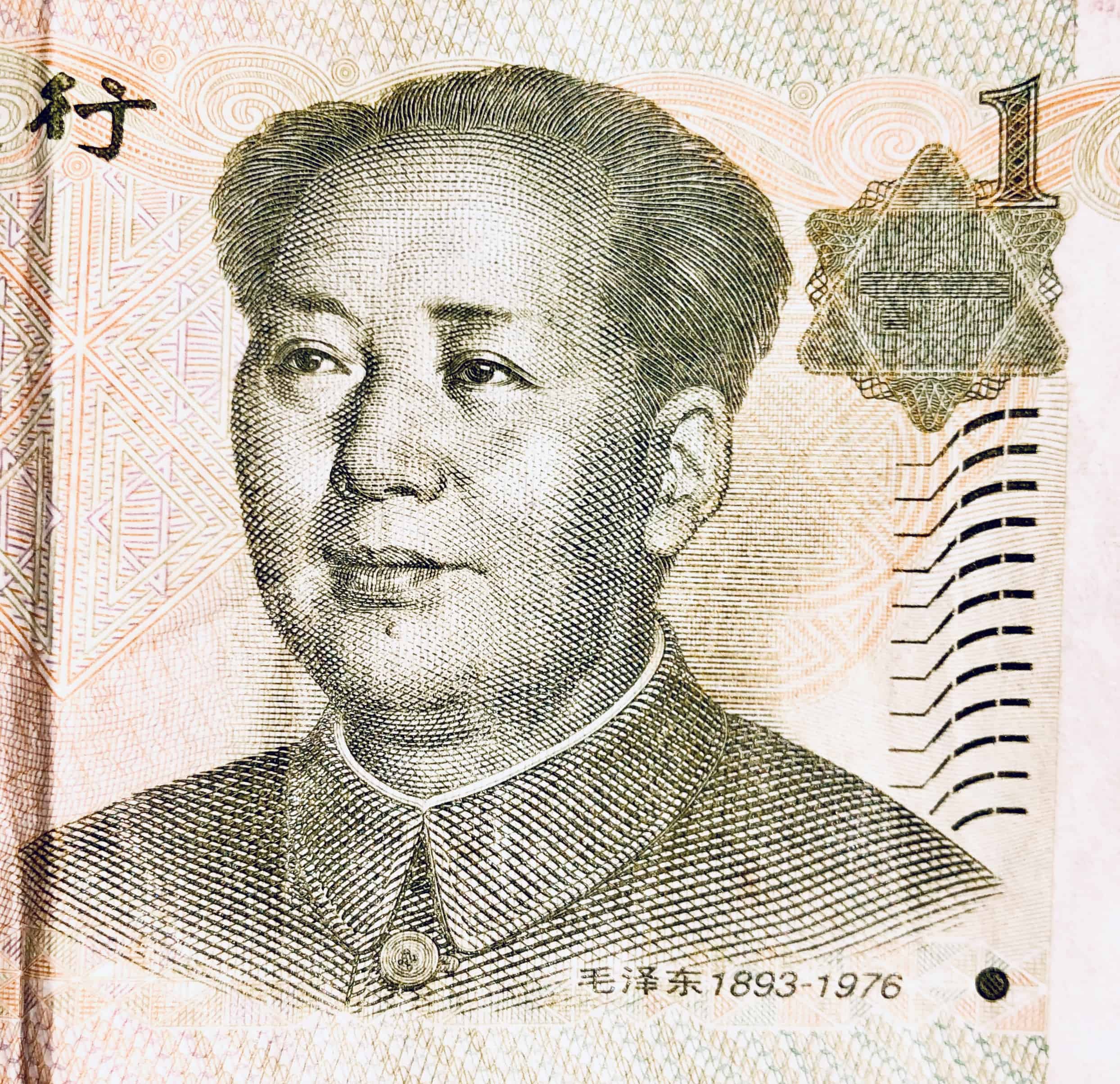
The Financial institution of China’s considerably secretive digital foreign money pilot program has made many individuals fairly curious.
The financial institution not too long ago offered an official clarification of how the digital yuan or renminbi was being examined and the way it would possibly work if and when it’s launched.
A spokesperson on the Financial institution of China, which is likely one of the 4 largest state-managed industrial banks within the nation, mentioned throughout an look on the China Central Tv on April 19 that the brand new nationwide digital foreign money pilot take a look at was carried out in a number of main cities – together with Shenzhen, Suzhou, Xiongan new space, Chengdu, and the longer term location of the Winter Olympics.
The spokesperson clarified that the continuing checks don’t suggest that the digital renminbi has truly been issued to be used by most people.
The consultant said:
“The present closed take a look at of digital yuan is not going to have an effect on the industrial operation of listed establishments, nor will it have an effect on the RMB issuance and circulation system, monetary market and social economic system outdoors the take a look at surroundings.”
To make sure that the reserve financial institution’s digital foreign money isn’t oversold, industrial entities in China have dedicated to paying a 100% reserve to the central banking establishment. When the digital foreign money is issued, the Individuals’s Financial institution of China will change the foreign money to native banks or different monetary establishments dealing with such transactions. These establishments will then problem the digital yuan into public circulation.
The financial institution has already finalized its top-level design of the nationwide digital foreign money. It should reportedly be primarily based on a two-layer structure and two-tier supply system.
Ought to China’s on-line banking and different digital fee platforms go offline as a consequence of poor community sign energy, then the digital foreign money’s twin offline know-how will be certain that transactions will get processed.
The Financial institution of China famous:
“Within the absence of a community, so long as two cell phones geared up with a digital yuan and digital pockets are touched, the switch or fee operate could be realized.”
The Chinese language model of the digital foreign money gained’t be tied or depending on customers’ financial institution accounts. Will probably be free or work independently from the nation’s present banking system, in response to Financial institution of China officers.
Not like decentralized cryptocurrencies, the digital renminbi will probably be issued by China’s reserve financial institution.
The nationwide digital foreign money can even reportedly be backed by the nation’s credit score. The financial institution claims that compared with Bitcoin (BTC), the brand new digital foreign money can have extra value stability.
China’s digital foreign money has been examined as a part of a transport subsidies scheme for presidency and home enterprise employees.
Financial exercise in Indonesia has slowed down considerably following the lethal Coronavirus (COVID-19) outbreak.
Based on native experiences, some companies within the trillion-dollar financial system have shut down utterly. Peer to look (P2P) lending platforms are additionally experiencing main challenges, which embrace having to cope with quite a few requests for debt restructuring.
Adrian Gunadi, chairman of Indonesia’s Fintech Lenders Affiliation (AFPI), lately famous that roughly half of the group’s members, representing about 80 native P2P lending companies, have obtained requests for debt restructuring.
Gunadi informed native information outlet KrAsia that the AFPI has requested that lenders talk successfully with debtors. He clarified that the platforms could not have the ability to full restructuring independently. He defined that the capital for the loans has been supplied by traders and lenders, and never the platform managers or homeowners.
Gunadi, who’s the CEO and co-founder at Investree (a P2P lending market), has been speaking to native enterprise debtors who’ve obtained about IDR 2 billion (appr. $127,500) in loans. These debtors come from industries that had been most affected by the Coronavirus disaster. They primarily embrace distribution companies to native resorts and retail vogue retailers.
Gunadi stated that native authorities and companies are contemplating varied choices that can assist present monetary reduction to debtors throughout these difficult instances, like deferring funds or easing a number of the phrases on excellent loans.
Nonetheless, he confirmed that in the end, the lenders are the ultimate “decision-makers.”
Between 3.92–3.98% of all excellent loans on Indonesia’s P2P platforms had been categorised as non-performing throughout January and February 2020. This, in response to the nation’s monetary regulator, the Monetary Companies Authority.
Native sources stated that the charges on such loans may enhance considerably if adjustments are usually not made to reimbursement schedules.
Naila Huda, a researcher working on the Institute for Growth of Economics and Finance, stated that it’s difficult for Fintech corporations to file purposes for debt restructuring as a result of Fintech apps are “solely the mortgage distributors from lenders to debtors.”
Huda defined that they aren’t licensed to supply any reductions for excellent debt.
She advisable that Fintech corporations can supply an curiosity low cost for all new loans or loans that haven’t obtained approval from lenders.