
Uncategorized
European Fee Plans Crypto-Asset Laws in Q3 of 2020
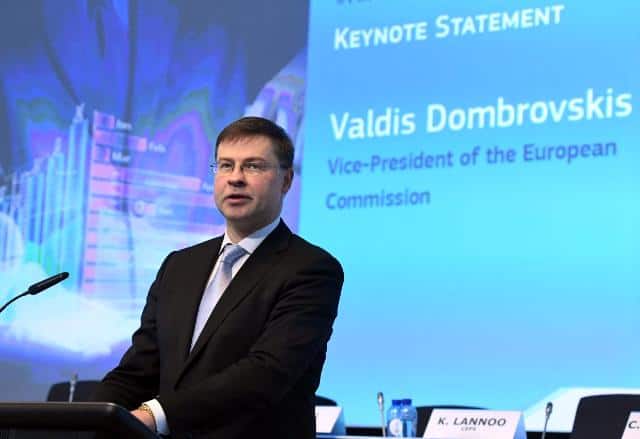
The European Fee (EC) intends on publishing potential laws for digital belongings or crypto-assets in Q3 of 2020. That is in line with an announcement Govt Vice-President Valdis Dombrovskis on behalf of the EC. The reveal was squirreled away in a European Parliament query web page.
The assertion in its entirety is republished beneath:
The fifth Anti-Cash Laundering Directive(1) (5AMLD) launched in 2018 a primary set of anti-money laundering necessities associated to digital currencies. In the meantime, the Monetary Motion Job Pressure (FATF) adopted in October 2018 broader definitions of ‘digital belongings’ and ‘digital asset service suppliers’(2). As well as, the Fee printed in July 2019 its second Supranational Danger Evaluation Report(3), through which the extent of risk associated to digital currencies and digital belongings was thought-about as vital for each cash laundering and terrorism financing.
The Fee plans to suggest new legislative proposals within the first quarter of 2021 to make sure a extra complete EU coverage on stopping cash laundering and countering the financing of terrorism (AML/CFT). Work at worldwide degree would recommend a have to increase the scope of sector or entities lined by AML/CFT to all digital belongings suppliers.
The Fee intends to come back ahead with a legislative initiative on crypto-assets(4) within the third quarter of 2020. To organize this initiative, the Fee carried out a public session between December 2019 and March 2020.
This session had a devoted part on AML/CFT points of crypto-assets. Specifically, it requested for stakeholders’ views on the necessity to align the definition used within the EU AML/CFT framework with the FATF suggestion or with a ‘crypto-asset’ definition. The Fee will take these stakeholders’ views into consideration when getting ready its affect evaluation and legislative proposal.
An inception affect evaluation from a while in the past supplies some perception into the enigma.
In response to this doc:
“Crypto-assets are a sort of digital belongings that rely totally on cryptography and distributed ledger expertise (DLT). A variety of crypto-assets exist, encompassing completely different options and features, therefore presenting completely different challenges and dangers. Regardless that there is no such thing as a EU classification for crypto-assets, regulators usually agree to differentiate three principal sorts of crypto-assets. These are: (i) cost/exchange-type tokens (for instance, the so-called digital currencies akin to ‘Bitcoin’), (ii) investment-type tokens (which give proper to possession rights and/or entitlements just like dividends, akin to ‘safety’ tokens which can or could not qualify as ‘monetary devices’ beneath the Market in Monetary Devices Directive – MiFID II), and (iii) the ‘utility-type’ tokens that allow entry to a selected services or products.”
Whereas safety tokens or digital securities could fall beneath current regulation the actual fact these belongings are digital, and maybe managed on a distributed ledger, surfaces new questions and challenges.
Digital currencies have moved far past Bitcoin to stablecoins and cocktail tokens that could be primarily based off a bundle of various belongings and even primarily based on an algorithm. Digital currencies that aren’t primarily based on fiat foreign money might create unforseen systemic issues.
Non-security belongings that aren’t currencies, or utility tokens, might be regulated – however the query is how. Maybe we’ll know extra in Q3.
H/T Hogans Lovells.
PI_COM_Ares(2019)7834655_EN_TXT